New Delhi, Oct 22: India’s agriculture gross non-performing assets (GNPA) at scheduled commercial banks could rise to 5.3–5.6 per cent by March 2028, as the weakest monsoon since 2015 strains kharif crop loans, according to a CareEdge Ratings report. Public sector banks are expected to bear the larger share of the stress.
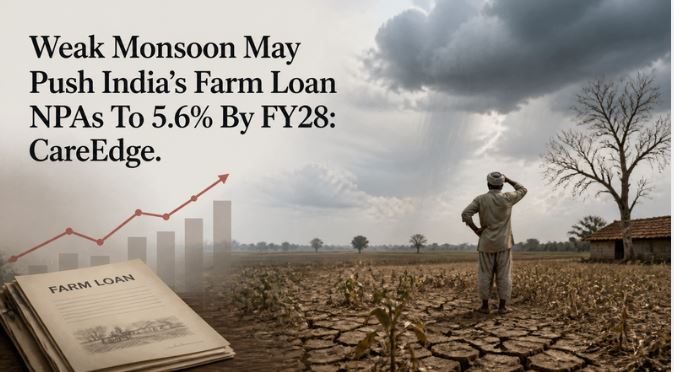
Representational Image
Current Stress Levels
The agriculture GNPA ratio stood at 5.11 per cent in June 2026, with farm-loan GNPAs at Rs 1.41 lakh crore. Although agriculture accounts for only 12.9 per cent of scheduled commercial bank advances, it represents 37.5 per cent of all bank GNPAs.
CareEdge expects the ratio to improve to 4.6–4.8 per cent by March 2027, aided by strong credit growth and write-offs. However, it is projected to rise thereafter as crop loans in monsoon-deficient regions turn overdue and are classified as NPAs.
Monsoon Impact
The 2026 southwest monsoon ended at 87 per cent of the long-period average, the weakest season since 2015, according to the India Meteorological Department. The shortfall was concentrated in states that account for most agricultural credit.
About 68 per cent of scheduled commercial bank agriculture credit is in states where rainfall was at least 20 per cent below normal, compared with 48 per cent during the 2015 drought year. This concentration increases the risk of loan delinquencies in FY28.
NPAs May Reach Rs 2 Lakh Crore
Agriculture GNPAs are projected to rise from Rs 1.41 lakh crore in June 2026 to Rs 1.47–1.53 lakh crore by March 2027, and further to Rs 1.9–2 lakh crore by March 2028. The weak monsoon alone could add 70–80 basis points to the farm GNPA ratio.
Including restructured farm loans in drought-affected areas, which remain classified as standard assets, stressed agriculture advances could reach 6–6.3 per cent of total agriculture advances.
What It Means For Banks
The report signals that while headline farm-loan asset quality has improved sharply since the pandemic, the 2026 monsoon shortfall could reverse part of that gain. Banks with higher exposure to rain-dependent kharif crops and deficit rainfall states may need closer monitoring of repayments, restructuring and provisioning in the coming quarters.