New Delhi, 26 October 2026: India’s cultural wealth extends far beyond its heritage. Its potential also lies in the knowledge it carries, the communities it sustains, the talent it nurtures and the economic opportunities it can create. This larger role of culture in the country’s development was at the centre of Swarnika Samvaad: Dialogue on Creative and Cultural Economy of India, convened by Padma Vibhushan Dr. Sonal Mansingh at the India International Centre, New Delhi, on Saturday.
Organised as part of the Golden Jubilee celebrations of the Centre for Indian Classical Dances (CICD), the Dialogue brought together perspectives from public life, academia, cultural institutions, the arts and creative industries. Its discussions examined how India can connect its cultural knowledge and artistic traditions with contemporary development priorities as it advances towards Viksit Bharat @ 2047.
The programme approached this question through three connected themes: culture’s contribution to national development, the need to expand engagement with cultural and creative expressions, and the role of skills, enterprise, policy and investment in building a stronger creative economy.
The inaugural plenary, India, Culture & Society, featured Ms. Bansuri Swaraj, Hon’ble Member of Parliament, Lok Sabha; Shri Sasmit Patra, Hon’ble Member of Parliament, Rajya Sabha; and Padma Vibhushan Dr. Sonal Mansingh, Founder-President, CICD. The session set the context for examining culture’s relationship with India’s social fabric, values, identity and aspirations.
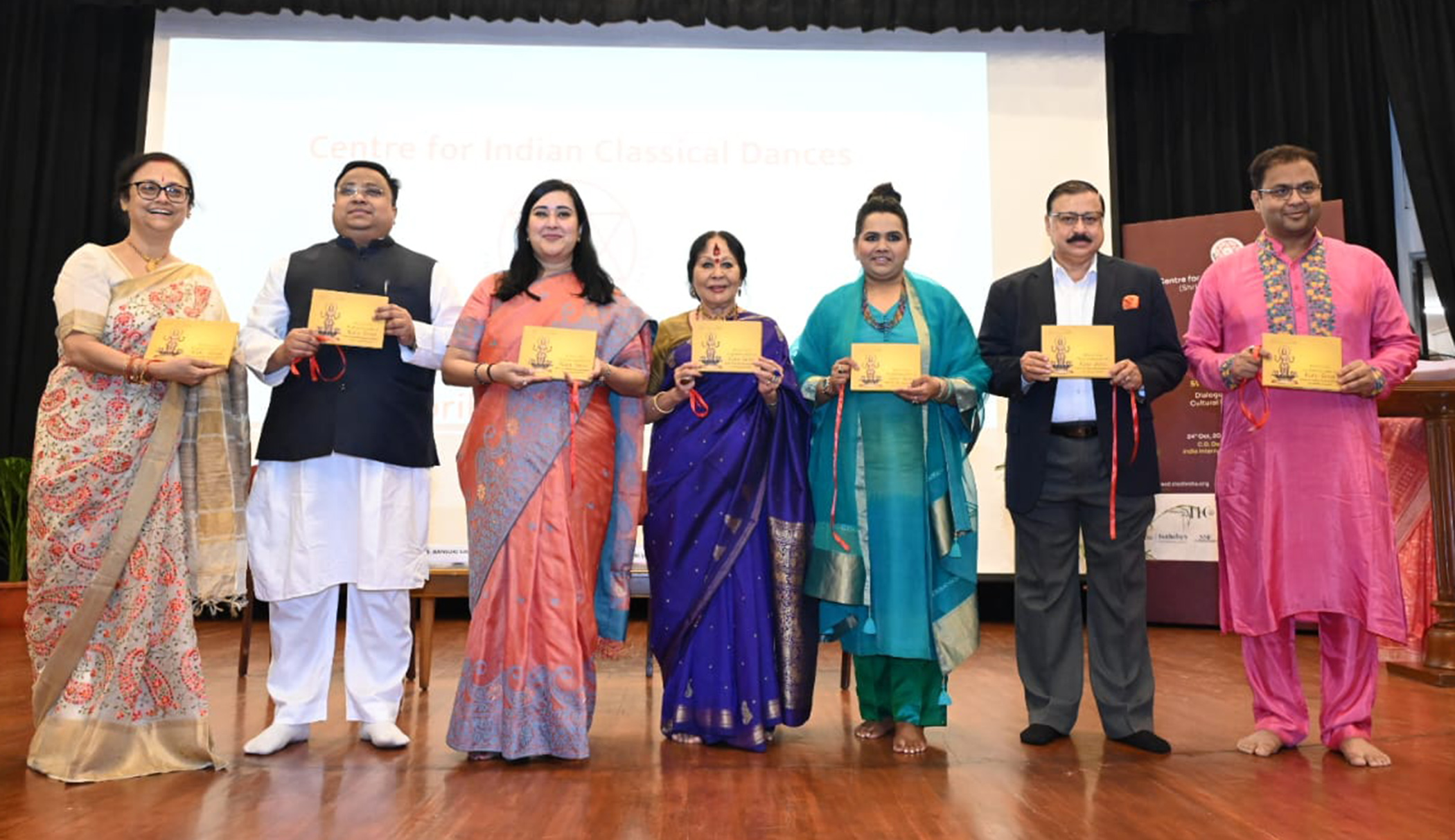
A special moment in the programme was the unveiling of Rhythm of a Lifetime, an illustrated book on Dr. Sonal Mansingh created by school students. The initiative brought a younger generation into the celebration of her artistic journey and highlighted the importance of passing cultural knowledge and traditions on to future generations.
Padma Vibhushan Dr. Sonal Mansingh, Awardee and Former Member of Parliament, Rajya Sabha, said, “The cultural and creative economy must be recognised as an important contributor to India’s economic strength. We need a broader dialogue that brings together artists, policymakers and relevant ministries to explore how the performing arts can contribute to economic growth and how artists can be better supported through effective policies. Creativity cannot be viewed in isolation from culture, because our cultural roots give creativity its true meaning. This dialogue is an important step towards developing a policy framework that recognises the contribution of artists and strengthens India’s cultural and creative economy.”
Connecting Culture with National Development
The first thematic session, Culture as a Driver of National Development, examined the place of culture in the wider development agenda, including its potential contribution to education, tourism, diplomacy and community development.
The session was moderated by Dr. Sampadanand Mishra, Director, Centre for Human Sciences, Rishihood University, and featured Shri Shyam Saran, President, India International Centre; Dr. Sachchidanand Joshi, Member Secretary, Indira Gandhi National Centre for the Arts (IGNCA); Shri Abhijit Gokhale, Akhil Bharatiya Sangathan Mantri, Sanskar Bharati; Shri Anurag Bhadouria, politician; Prof. Sachin Chaturvedi, Vice-Chancellor, Nalanda University; and Ms. Lily Pandeya, Joint Secretary, Ministry of Culture, Government of India.
The theme placed an important question before the cultural sector: how can culture be integrated more meaningfully into national priorities? Beyond preservation, the discussion framework considered how cultural resources can contribute to learning, community life, tourism and India’s engagement with the world.
Bringing Cultural Expressions Closer to Contemporary Audiences
The second session, Expanding Engagement with Cultural and Creative Expressions, focused on how traditions can remain living and evolving while reaching wider audiences. It examined the role of festivals, crafts, cuisine, performing arts, tourism and digital platforms in encouraging cultural participation and creating demand for cultural experiences.
The session was moderated by Shri Sunit Tandon, stage and screen actor and President, Delhi Music Society, and featured Padma Bhushan Shri Rajeev Sethi, Architect, Designer and Scenographer; Padma Shri Shri Paresh Maity, contemporary Indian artist; and Shri Vivek Ranjan Agnihotri, award-winning filmmaker and public intellectual.
The session’s focus highlighted the importance of making cultural experiences accessible and relevant to contemporary life. Sustaining traditions also calls for opportunities for people to experience, participate in and engage with them, including through newer formats and platforms.
Strengthening India’s Cultural and Creative Economy
The third session, Building India’s Cultural and Creative Economy, addressed the practical ecosystem needed to support cultural practitioners and creative enterprises. Its themes included professional skills, entrepreneurship, infrastructure, intellectual property, public policy and investment.
The session was moderated by Dr. (Prof.) Ramesh C. Gaur and featured Dr. Mandavi Singh, Vice-Chancellor, Bhatkhande Sanskriti Vishwavidyalaya; Shri Jayesh Bhatia, Partner and Managing Director, Intellecap; Smt. Sandhya Raman, Costume Designer and Curator; and Shri Rajan Navani, Chairman and Managing Director, Jetline Group of Companies and JetSynthesys.
The session brought the economic dimension of culture into focus: creative talent needs an enabling environment in which skills can develop, enterprises can grow and cultural work can generate sustainable livelihoods. Policy support, investment and appropriate infrastructure are important considerations in building such an ecosystem.
Taking the Cultural Development Conversation Forward
Together, the three themes connected the recognition of culture as a national asset with the need to widen public engagement and strengthen the structures that support creative work. They also reflected the larger question at the heart of Swarnika Samvaad: how can India’s cultural knowledge and creative talent contribute more substantially to social and economic development?
Swarnika Samvaad aims to develop a shared vision for culture’s role in India’s development and identify priorities across policy, education, skills and livelihoods, while exploring opportunities for funding, investment and cross-sector partnerships. Proposed follow-up measures include a post-dialogue recommendations and action document, along with initiatives to translate the discussions into action. The event was supported by the Government of NCT of Delhi and the India International Centre. Partners included Sotheby’s International Realty (India), Sant Sanganeria Foundation, Morepen, Potli Collective, National Economic Forum, The CSR Universe and Nalanda Literature Festival.
Founded in New Delhi in 1977 by Padma Vibhushan Dr. Sonal Mansingh, the Centre for Indian Classical Dances (CICD), also known as Shri Kamakhya Kalapeeth, has spent nearly five decades nurturing generations of dancers and enriching India’s classical dance traditions. Its holistic approach brings together dance, yoga, Sanskrit, music and allied arts, drawing on India’s civilisational knowledge, aesthetics and philosophy. As CICD marks its Golden Jubilee, it continues to work towards keeping India’s living cultural traditions vibrant and relevant to contemporary life.