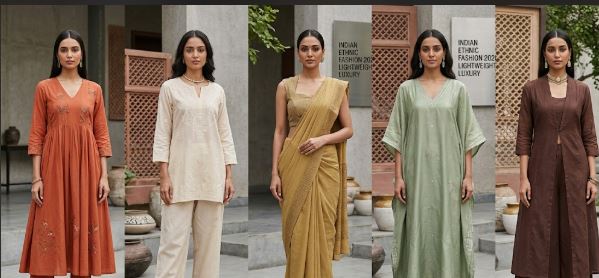
Indian ethnic fashion is entering a fresh style era in 2026, with designers and consumers increasingly embracing lighter fabrics, relaxed silhouettes and versatile designs that bring together traditional craftsmanship and modern-day comfort.
The shift marks a move away from heavily layered and restrictive festive outfits towards clothing that feels easier to wear while retaining the richness of Indian fashion. From contemporary Anarkalis and Chikankari co-ords to pre-draped sarees and flowing kaftans, ethnic silhouettes are being redesigned for lifestyles that demand both style and flexibility.
Anarkalis Get a Modern Makeover
The classic Anarkali continues to be a favourite, but its latest interpretation is more streamlined and comfortable. Flowing shapes, defined waistlines, contemporary prints and straight-fit trousers are giving the traditional silhouette a fresh identity.
Instead of relying solely on heavy embellishment, designers are experimenting with botanical patterns, subtle embroidery and fluid fabrics. The result is an outfit that retains the graceful movement of an Anarkali while making it practical for longer hours.
Chikankari Moves Into Contemporary Co-ords
Chikankari is finding a new audience through modern two-piece sets. Coordinated kurtas, trousers and lightweight separates bring the delicacy of traditional embroidery into a more relaxed wardrobe.
The appeal lies in versatility. A co-ord can look understated with minimal jewellery and flats during the day and become more occasion-ready with statement earrings, a dressier handbag and elevated footwear.
This combination of handcrafted detail and contemporary construction is helping traditional embroidery find a place beyond conventional ethnic outfits.
Earthy Colours Take Centre Stage
Festive fashion is also seeing a softer colour story. Alongside classic reds, pinks and jewel tones, shades such as rust, terracotta, sage, ivory, muted mustard and deep brown are gaining attention.
These colours work particularly well for daytime celebrations and understated occasionwear. When paired with delicate embroidery, textured fabrics or traditional motifs, they create a sophisticated look without appearing overly elaborate.
The growing preference for these shades also reflects the broader movement towards versatile clothing that can be worn beyond a single festive occasion.
Pre-Draped Sarees Make Traditional Dressing Easier
The saree remains one of India's most enduring fashion statements, but modern versions are making the silhouette easier to wear.
Pre-draped sarees, saree skirts and structured draped styles reduce the complexity of traditional pleating while preserving the visual appeal of the garment. Contemporary blouses and modern waistlines further update the look.
For younger consumers and busy professionals, these formats offer a practical way to embrace traditional dressing without spending considerable time managing the drape.
Kaftans Bring Relaxed Luxury to Ethnic Wear
Flowing kaftan dresses are also emerging as a comfortable alternative to structured occasionwear. Their relaxed construction allows freedom of movement, while fabrics such as Chanderi, tissue and lightweight silk can give them a polished festive finish.
Minimal embroidery, delicate motifs and subtle detailing can turn a simple kaftan into an elegant outfit for festive lunches, intimate celebrations and evening occasions.
The silhouette also reflects one of the biggest changes in contemporary fashion: comfort is no longer viewed as separate from luxury.
The Rise of Lightweight Festive Dressing
The biggest story in ethnic fashion for 2026 may be the growing popularity of lightweight luxury.
Today's consumers are increasingly looking for outfits that provide visual richness without unnecessary layers or weight. Quality fabrics, artisanal details, interesting prints and thoughtful tailoring are becoming more important than excessive embellishment.
This does not mean traditional heavily embroidered clothing is disappearing. Elaborate outfits continue to have an important place in weddings and major celebrations. However, alongside them, a new category of everyday festive fashion is gaining momentum.
One Outfit, Multiple Styling Possibilities
Versatility is becoming a major consideration when building an ethnic wardrobe. Consumers are looking for pieces that can be restyled rather than worn only once.
A simple Anarkali can be paired with traditional jewellery for a festive gathering and styled more minimally for a daytime event. A Chikankari co-ord can work with flats during the day and statement accessories at night. Similarly, a pre-draped saree can move from a formal event to a celebration with a simple change of accessories.
This approach makes the modern ethnic wardrobe more practical while allowing individual style to take centre stage.
Tradition Meets the New Indian Lifestyle
The evolution of ethnic fashion in 2026 is not about replacing traditional clothing. It is about adapting it.
Anarkalis are becoming lighter, Chikankari is moving into contemporary co-ords, sarees are being redesigned for convenience and kaftans are adding a relaxed sense of occasionwear. Together, these trends show how Indian fashion continues to evolve while remaining connected to its cultural roots.
The new direction is clear: festive fashion can be beautiful without being cumbersome, traditional without feeling dated and luxurious without sacrificing comfort.
As Indian wardrobes become more versatile, the most influential ethnic silhouettes of 2026 are likely to be those that allow people to celebrate tradition while dressing for the realities of modern life.